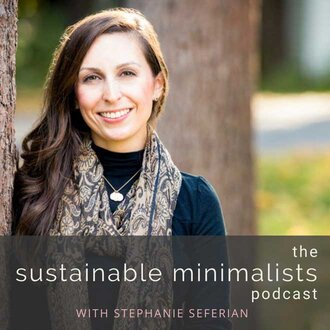
The Sustainable Minimalists Podcast is live: Listen here.
Future-Conscious Thinking

Future-Conscious Thinking

Many people — and many societies, for that matter — rely on short-sighted quick wins as their Number One go-tos when managing oversized problems. But what works in the short-term likely isn’t best in the long run; worse, such near-sightedness rarely considers its impacts on generations to come.

Enter longpath thinking, a mindset that prioritizes future-conscious thinking and behavior.

On today’s episode I speak with author and futurist Ari Wallach. Ari argues that when we step away from knee-jerk reactions we will both reclaim meaning in our lives and help preserve the planet for future generations. And if making daily decisions by considering their reverberations 500 years from now sounds revolutionary to you, you’re absolutely right. Ari’s on the show to ease the transition to future-consciousness in 3 simple steps.


Here’s a preview: 

[2:00] “Future” isn’t a noun; it’s a verb.

[4:30] Debunking lifespan biases so as to create a better world for future generations

[6:00] 3 problems associated with short-termism

[11:30] How an understanding of transgenerational empathy encourages us to act on behalf of future generations

[17:00]  What doubling down on sandbag strategies means for fulfilling our collective moral obligations

[20:00] 3 ways to start practicing longpath thinking and acting right now


Resources mentioned:


When we step away from knee-jerk reactions and short-term solutions we will both reclaim meaning in our lives and help preserve the planet for future generations. Enter Longpath thinking, a mindset that prioritizes future-conscious thinking and behavior. On this episode of the Sustainable Minimalists podcast: how to transition to future-consciousness in 3 simple steps.

Comments are closed.

Listen to the Podcast

The Sustainable Minimalists Podcast
Latest podcast:

Saying No To New

New things are everywhere—and they’re causing us to disconnect from what we value most.

In a world that constantly tells us that new is better, our relentless pursuit of material wealth is costing us money, time and happiness. Worse, when we define ourselves by what we own rather than who we are, we reduce our lives to a single, superficial dimension.

On today’s show, New York Times journalist Eric Athas offers advice for stepping away from the cycle of constant buying, saying no to shallowness, and discovering the right kind of “new” in our lives.

Here's a preview:

[8:00] We're wired to become bored the familiar, and other truths to newness

[16:00] Consumption has costs! (In fact, it robs us of our finite attention, dilutes our capacity for genuine enjoyment, and misaligns our pursuit of happiness.)

[26:00] Musings on the ways in which overconsumption leads to superficiality

[37:00] Put down the trinket! Redefining what it means to experience novelty, growth, and freshness without relying on a transaction

Resources mentioned:

Hosted by Simplecast, an AdsWizz company. See pcm.adswizz.com for information about our collection and use of personal data for advertising.

Subscribe

My Story

Hello there, I’m Stephanie. I live a crazy, beautiful life as a full-time wife, blogger + mother to two spirited daughters. I’m on a mission to simplify eco-friendly living so as to greater enjoy life’s sweeter moments.

Want to know more? Read my story.

Sustainable minimalism for home, head + heart.

Join our community of eco-conscious women on a collective journey towards sustainable simplicity.

Join us!